Household & Everyday Calculators
Common Household Stains and How to Actually Remove Them
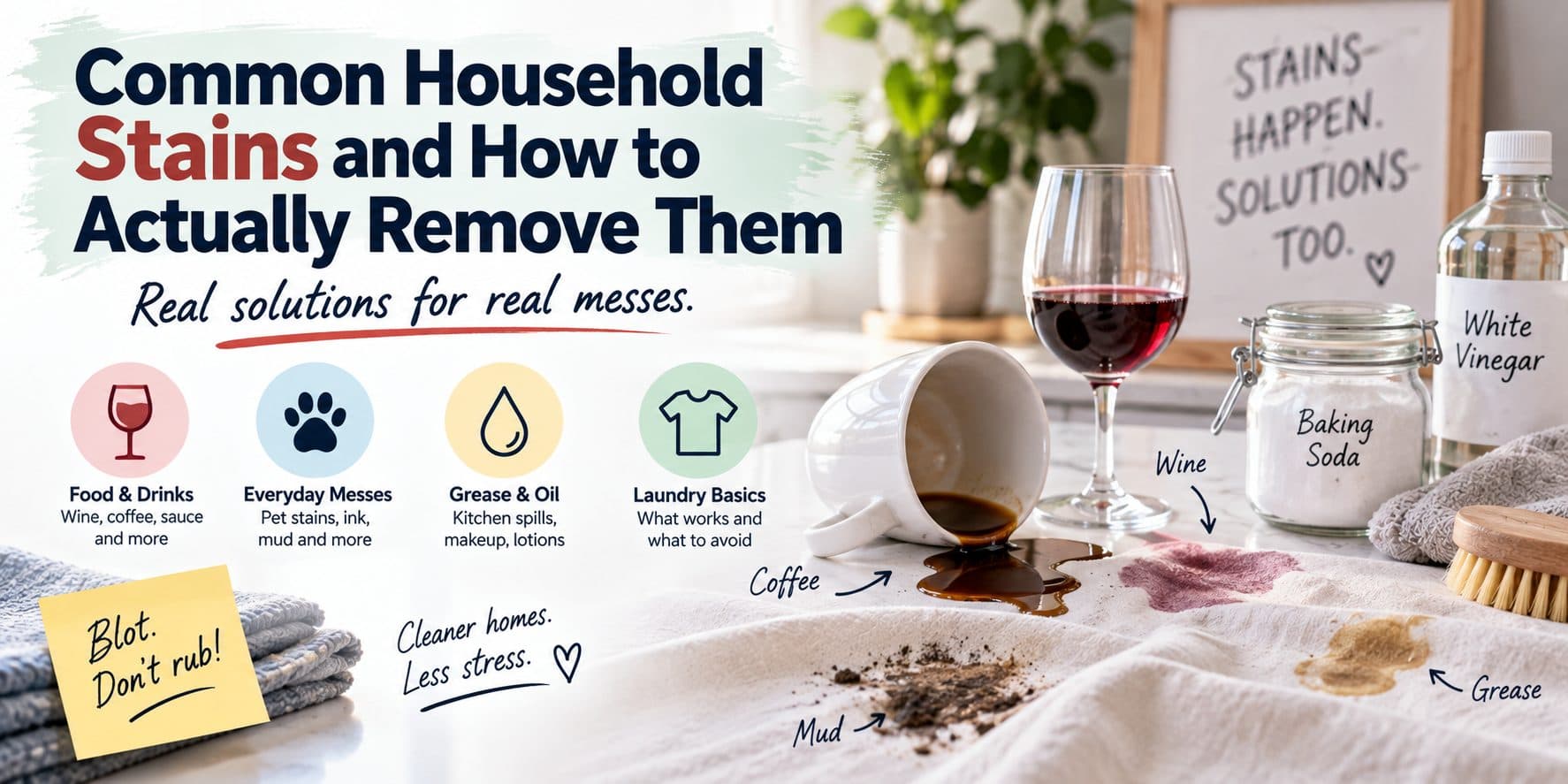
Most stain-removal failures happen in the first thirty seconds, not because the wrong product was used later. Reacting correctly in the moment matters more than any specific cleaning product.
The one mistake that makes almost everything worse
Rubbing a fresh stain spreads it and pushes it deeper into the fabric fibers. Blotting — pressing a clean cloth straight down and lifting — removes far more of the stain before it sets, especially for wine, coffee, and other liquid stains.
Protein-based stains need cold water, not hot
Blood, egg, and other protein-based stains are one of the few cases where the common instinct — rinse it out with hot water — actively backfires. Heat cooks the protein into the fabric, setting the stain permanently. Cold water, followed by an enzyme-based detergent, is the reliable approach.
Grease and oil respond to absorption, not water
Water and oil don't mix, so rinsing a grease stain often just spreads it. Sprinkling on a dry absorbent — cornstarch or baking soda — and letting it sit for 10–15 minutes before brushing it off pulls a surprising amount of oil out before you even reach for soap.
A quick reference beats guessing
Since the correct first move is different for almost every stain type, our Stain Removal Guide lets you pick the specific stain you're dealing with and get the right first step immediately, rather than trying to remember which rule applies to what.
Related tool
Stain Removal Guide
Find the right way to remove common household stains.